

ACEN embeds community programs into renewable energy projects, reaching over 310,000 people since 2019. In Zambales, Philippines, lahar-covered land is being transformed into a source of jobs, infrastructure, and opportunities for Indigenous communities.
Challenge
For decades, hundreds of hectares in San Marcelino, Zambales lay untouched: a grey, lahar-covered expanse left behind by a volcanic eruption, too barren for vegetation and too remote for roads. No enterprise had taken root there. No infrastructure reached it. Scenes like this are repeated across rural and Indigenous communities wherever renewable energy expands across Asia Pacific: land with potential, but no pathway to opportunity.
Even with the implementation of clean energy to power communities, left unaddressed, it risks repeating the extractive patterns of the past, arriving, generating power, and moving on without meaningfully including the people who call that land home.
Solution
ACEN saw the potential to build a foundation in that lahar field. Since 2019, the Ayala Group’s renewable energy platform has treated community development as a budget-protected part of how it builds projects rather than an afterthought. Funded from operating revenue, its approach is organised around six pillars: livelihoods, infrastructure, education, Indigenous Peoples empowerment, health, and climate resilience.
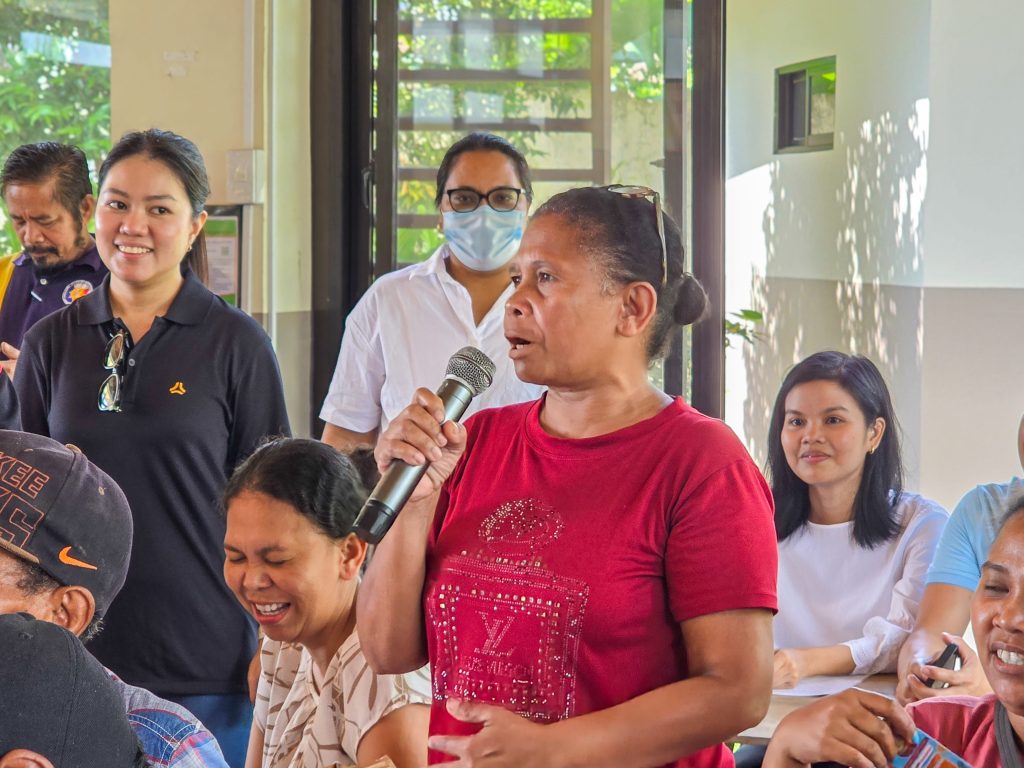
In San Marcelino, that meant building before generating a single watt. ACEN developed six kilometres of access roads and two bridges and a 14-kilometre transmission line, while investing ₱456 million (US$7.24 million) in the community in 2023 alone. More than 3,600 green jobs were created, with four in five filled by residents of surrounding barangays. ACEN also invested ₱2 million to help the local Indigenous community formalise its ancestral domain, including providing mobile phones that enabled families to be mapped for the first time.
The same philosophy has taken root beyond San Marcelino. In Ilocos Norte, ACEN developed a 4.5-hectare model farm with UPLB’s College of Forestry that has trained around 300 farming families in agroforestry.
Impact
Since 2019, ACEN’s programmes have reached more than 310,000 individuals and 91,000 families; between 2024 and 2026 alone, US$8 million reached roughly 113,000 people and 33,000 families across some 800 communities. Local hiring has held above 80 per cent, supporting around 9,000 jobs annually, while agro-circularity initiatives have helped farmers grow their produce’s value by up to 40 times.
Perhaps the clearest evidence of change can be measured in the length of a journey as a result of the investment in infrastructure, resulting in an addition of nearly 6 kilometres of roads and two bridges. “Before, our Indigenous Peoples used to travel for three to five hours from our communities,” recalls Robert Dela Cruz, Indigenous Peoples Mandatory Representative for San Marcelino. “Now, because SanMar Solar is here, the travel time going to the town proper was reduced to only one to two hours.”
In Australia, more than A$4 million (US$2.8 million) has flowed into Indigenous-owned businesses, woven directly into ACEN’s supply chain.
Future outlook
The lahar field in San Marcelino is no longer barren. More importantly, it offers a model for what renewable energy development can leave behind when communities are treated as partners rather than passive beneficiaries.
ACEN intends to replicate that approach wherever its turbines and solar panels rise next. By the end of 2026, it aims to have reached around 400,000 people since 2019, with its Social Progress Index tracking measurable improvements in community well-being. By 2030, the company is targeting 500,000 cumulative beneficiaries and US$70 million in total investment, while helping livelihood programmes mature into self-sustaining enterprises.
The ambition is not simply to build renewable energy projects, but to ensure that the communities surrounding them are stronger because those projects were built.
Source: Stewardship Commons
###
ACEN among Steward Leadership (SL25) awardees for 2026
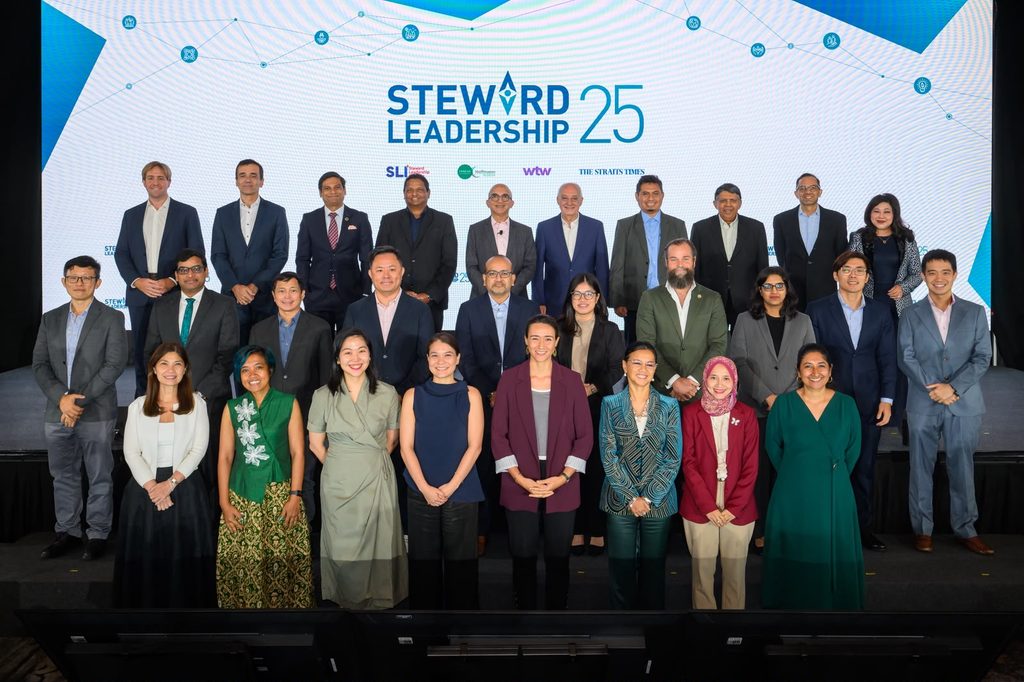
ACEN is honored to be named among the 2026 Steward Leadership 25 (SL25) awardees, selected from over 100 submissions across Asia Pacific.
Announced in Singapore, the recognition highlights our efforts to create lasting impact beyond renewable energy development—supporting livelihoods, education, and Indigenous Peoples empowerment in our host communities.
Representing ACEN at the awards ceremony was Irene Maranan, Senior Vice President and Head of Communications and Sustainability.
This recognition belongs to our ACEN teams and community partners whose dedication brings our PositiveCharge+ sustainability strategy to life, creating meaningful opportunities for the communities we serve.
Check out the full list of winners here.