

Biodiversity and
ecosystem protection
Endemic to the Philippines, the Northern-rufous hornbill can be found in Luzon where some of
our renewable energy projects are located. (Photo courtesy of CCIPH)
Biodiversity and
ecosystem protection
Endemic to the Philippines, the Northern-rufous hornbill can be found in Luzon where some of our renewable energy projects are located. (Photo courtesy of CCIPH)
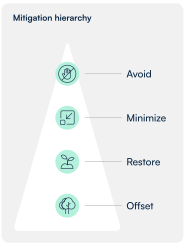
Guided by our ESG Policy and commitment to responsible renewable energy development, we uphold robust environmental management standards across our Philippine and international operations. Biodiversity considerations are embedded throughout the project lifecycle, applying the mitigation hierarchy to avoid impacts on critical habitats, minimize and restore where necessary, and offset residual impacts in line with international standards.
Our ambition is to achieve no net loss of biodiversity, while advancing initiatives that contribute to net-positive environmental outcomes where feasible.
Pledged support to DENR’s
5 million trees
by 2028 target
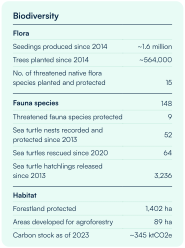
Sea turtle hatchlings released since 2013
3,200
Biodiversity assessments
and mitigation measures
During pre-development, we systematically screen projects using the Integrated Biodiversity Assessment Tool (IBAT), complemented by site-specific studies, to identify location-based nature-related risks—such as proximity to protected areas, key biodiversity areas, and sensitive species.
Across construction and operations, we implement context-specific biodiversity management measures and conduct regular monitoring, including bird and bat surveys, to support adaptive management. These practices strengthen our ability to identify, manage, and disclose nature-related risks and opportunities while delivering projects that advance climate action.
We establish protective buffer zones, or “No-Go Zones,” around ecologically sensitive areas such as creeks and forested sections to prevent disturbance and safeguard wildlife. On the ground, forest guards are deployed to deter illegal activities, including logging and slash-and-burn practices, supported by fire prevention measures and community awareness initiatives.
In partnership with the Department of Environment and Natural Resources (DENR), we conduct tree surveys, earth-balling, and inventory activities. We apply a tree replacement ratio of 1:50 or 1:100, depending on classification, and go beyond regulatory requirements through enhanced reforestation efforts—supporting habitat restoration and reducing the impact of vegetation clearance.
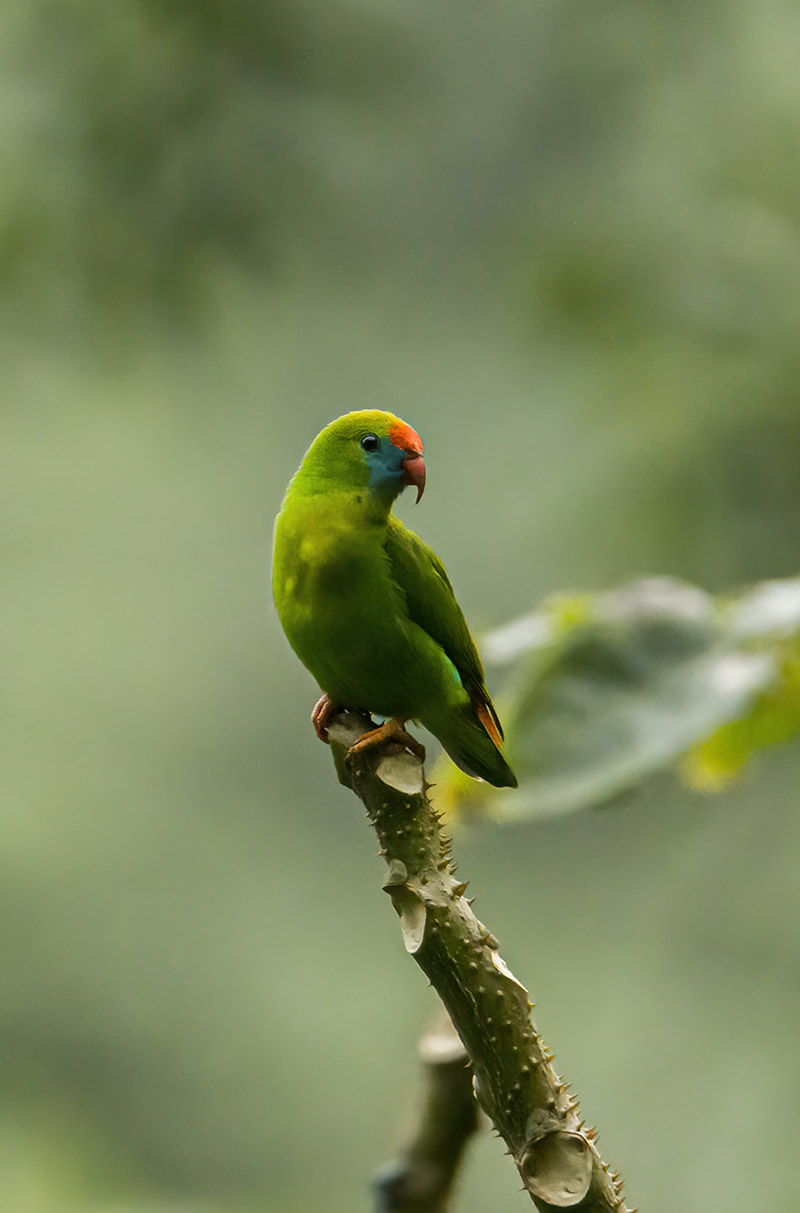
Insights from our HCVA, including the presence of different species such as the Philippine hanging parrot in our project sites, help ensure biodiversity considerations are integrated into mitigation plans throughout the project life cycle.
(Photo courtesy of CCIPH)
For sites identified as ecologically significant, we undertake more detailed assessments through High Conservation Value Assessments (HCVA) to strengthen the identification and management of nature-related impacts, risks, dependencies, and opportunities.
Our HCVA approach follows the Sukat ng Kalikasan (SnK) framework, a nationally developed methodology in the Philippines that integrates biodiversity values, ecosystem services, and socio-cultural considerations. Assessments cover six categories: species, ecosystems, threatened habitats, regulating and maintenance services, provisioning services, and cultural services.
This enables us to identify the presence of threatened or rare species and their habitats, and to assess ecosystem services that support local livelihoods—such as food and income—ensuring these are considered in project planning and community engagement strategies. Insights from HCVA inform our environmental and social management plans across the project lifecycle. They also strengthen our alignment with the Taskforce on Nature-related Financial Disclosures (TNFD) LEAP approach, enabling a more structured understanding of how our activities interact with nature.
These assessments guide the integration of mitigation and enhancement measures into project design and implementation—supporting informed decision-making and reinforcing our no net loss ambition.
Biodiversity initiatives across our projects
Across our portfolio, we implement biodiversity initiatives that combine ecosystem restoration, species protection, and community partnership —demonstrating how renewable energy development can contribute to nature-positive outcomes on the ground.
Conservation Estate in Ilocos Norte
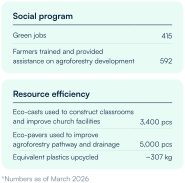
Established in 2014, our Conservation Estate in Ilocos Norte is a flagship, multi-pronged sustainability initiative focused on reforestation, agroforestry, and biodiversity protection. Now spanning approximately 1,400 hectares, the program restores degraded landscapes while strengthening climate resilience and supporting community development. Ongoing monitoring and conservation efforts continue to enhance ecosystem recovery and long-term stewardship of the area.
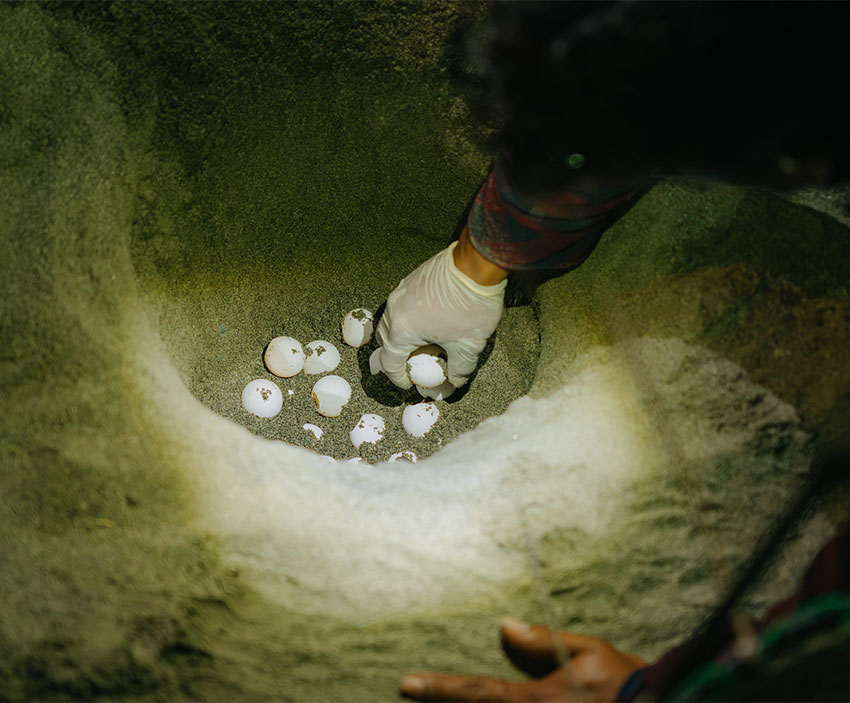
Through our Pawikan Conservation Program in Ilocos Norte, we built a dedicated hatchery to protect sea turtle eggs and hatchlings until they are released into the sea.
Alaminos Solar
At Alaminos Solar, we completed a three-year National Greening Program (NGP) site adoption in Barangay Siniloan, Laguna, covering 37 hectares. The initiative achieved a 90 percent survival rate across more than 54,000 indigenous and fruit-bearing trees.
Implemented in partnership with the Magsaysay Coconut Farmers Association, the program supported local livelihoods while contributing to biodiversity enhancement, forest recovery, and climate resilience.
Guimaras Wind
At Guimaras Wind, we advanced ecosystem rehabilitation through the 27-hectare Arboretum Project and the restoration of NGP sites in San Lorenzo, Guimaras. The Arboretum achieved a 100 percent survival rate, while a total of 176 hectares of upland and mangrove areas were rehabilitated under the NGP.
These efforts contribute to landscape-level restoration while meeting regulatory requirements and reinforcing our broader biodiversity objectives.
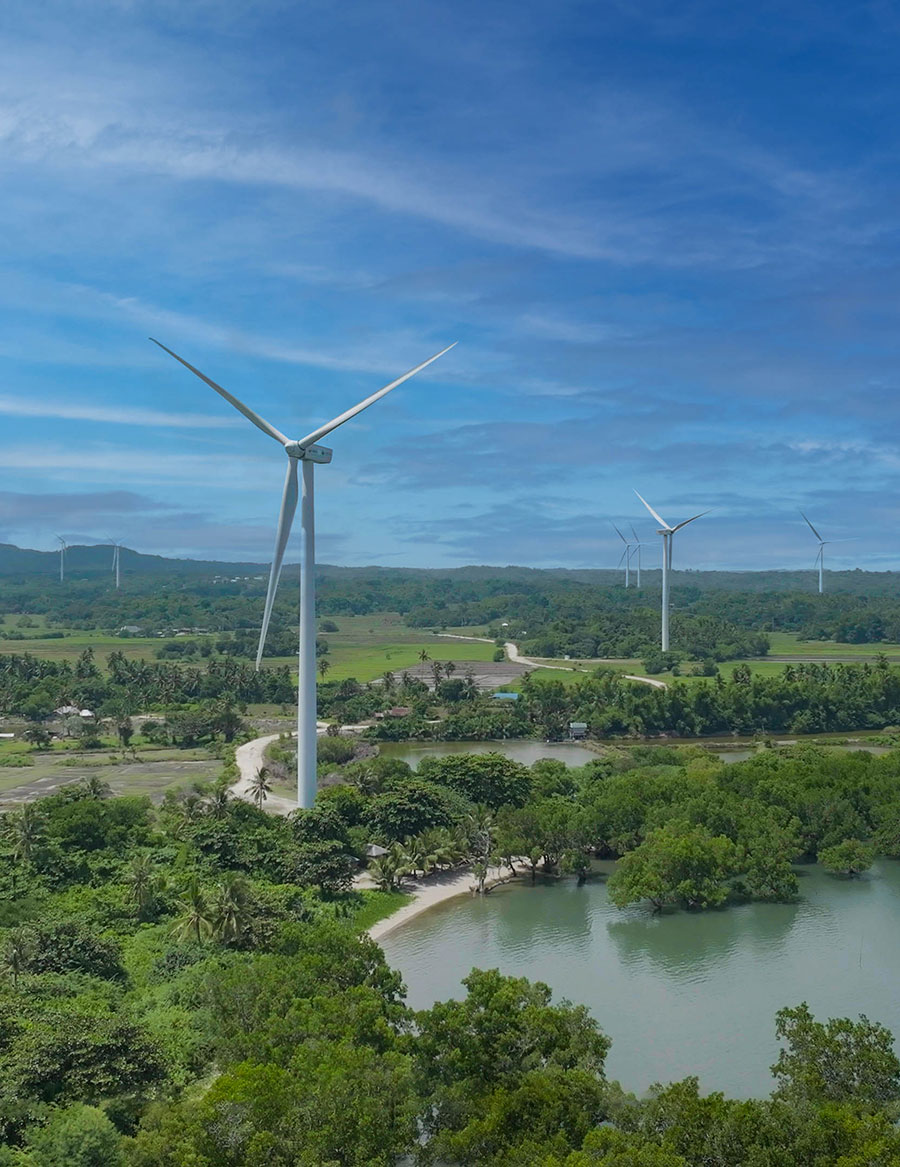
In 2025, our 54 MW Guimaras Wind project earned recognition from DENR for championing mangrove and forest protection program in Western Visayas.
Australia
New England Solar advances biodiversity stewardship through research partnerships and community collaboration. A three-year peer-reviewed study with the University of New England assesses soil, pasture, and livestock health under and around solar panels. This is complemented by preparations for satellite-based vegetation monitoring in collaboration with Macquarie University and CSIRO.
In parallel, we are exploring an additional research partnership to develop satellite imagery capable of real-time analysis of vegetation levels and composition. The project also supports local wildlife care through partnerships and targeted funding for rescue and rehabilitation infrastructure.
India
At Sitara Solar, Paryapt Solar, and Masaya Solar, we implement practical, site-level biodiversity measures, including bird shelters, water provision, tree planting, and responsible drainage design. Grass from site maintenance is shared with local farmers as cattle feed—supporting resource efficiency and local livelihoods.
Project teams also coordinate with local forest authorities to monitor wildlife movement and enhance on-site safety.
Vietnam
At Ninh Thuan Wind, we apply adaptive turbine curtailment measures to reduce potential impacts on bat populations, based on seasonal activity and site conditions. Adjusted shut-down periods and wind speed thresholds help balance biodiversity protection with operational efficiency—reflecting a targeted and data-driven approach to mitigation.
Lao PDR
Monsoon Wind applies non-intrusive biodiversity monitoring using audio recorders installed in surrounding forest areas to better understand wildlife activity during operations. By capturing sounds from species such as deer and bats, the project generates insights on movement and habitat use without disrupting natural behavior.
This science-based approach supports the coexistence of renewable energy development and forest ecosystems.
A pledge for the planet
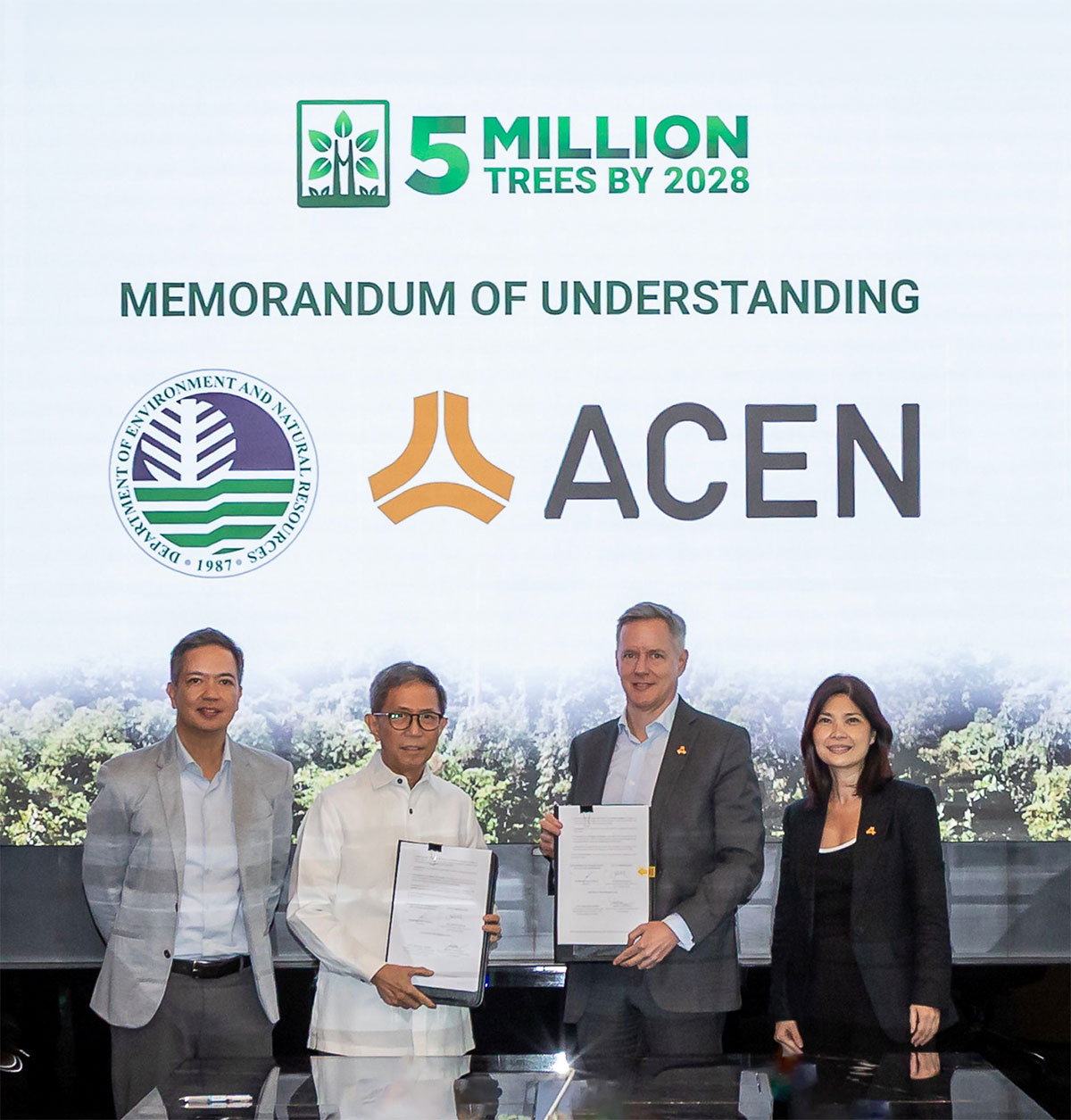
In 2025, we formalized our support for the Department of Environment and Natural Resources (DENR) “Forests for Life: 5 Million Trees by 2028” initiative—joining a broader Ayala Group commitment to restore forests and strengthen climate resilience.
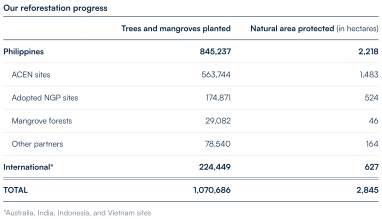
This national program aims to plant and grow five million trees across key provinces, including Ilocos Norte, with the potential to sequester an estimated 3.5 million tons of carbon by 2038. Our participation builds on the momentum of our own reforestation efforts, where we reached our one million trees target ahead of schedule in 2025—demonstrating our continued commitment to scaling nature-based solutions alongside renewable energy development.
In photo (L-R): Carlos Primo David, DENR Undersecretary for Integrated Environmental Science; Raphael Lotilla, DENR Secretary; Jonathan Back, ACEN CFO & Chief Strategy Officer; Irene Maranan, SVP & Head of Corporate Communications and Sustainability