

Climate and
carbon management
Endemic to the Philippines, the Northern-rufous hornbill can be found in Luzon where some of
our renewable energy projects are located. (Photo courtesy of CCIPH)
Climate and
carbon management
Endemic to the Philippines, the Northern-rufous hornbill can be found in Luzon where some of our renewable energy projects are located. (Photo courtesy of CCIPH)
The shift in our carbon story
From coal to 100 percent renewables—where emissions avoided now exceed Scope 1 emissions
Our pathway to Net Zero reflects a deliberate and decisive transformation—one shaped by changing energy needs, evolving market signals, and a long-term view of value creation.
In our early years, from 2011 to 2016, the focus was clear: support the Philippines’ economic growth through reliable and affordable baseload power. At the time, this meant building coal-fired capacity, as renewable energy technologies were still relatively costly and intermittent. By 2016, we had scaled to over 1,000 MW of capacity, with 93 percent coming from coal and only 7 percent from renewables.
By 2016, however, the global energy landscape had begun to shift. Renewables were becoming increasingly cost-competitive, sustainability considerations were moving into the mainstream, and capital was starting to favor low-carbon investments. In response, we made a strategic pivot, redefining its ambition from being a conventional power generator to becoming one of the largest renewable energy platforms in the region.
~20.5 million tC02e
Emission avoided from RE plants since 2016
The impact of this shift is clearly reflected in our carbon profile. Scope 1 emissions from thermal plants peaked in 2020 at 2.6 million tCO2e, before declining sharply as coal assets were divested—falling to near-zero levels by 2024. Over the same period, emissions avoided through our renewable energy portfolio increased significantly, from 241 thousand tCO2e in 2016 to nearly 5 million tCO2e in 2025.
By 2022, emissions avoided had already surpassed Scope 1 emissions, marking a critical inflection point in our transition. Since then, the gap has continued to widen, underscoring our evolution from a carbon-intensive generator to a decarbonization enabler.
Today, our approach to climate and carbon management goes beyond reducing our own footprint. It is about scaling solutions—deploying renewable energy at speed and scale, displacing fossil-based generation, and enabling broader system-wide emissions reductions.
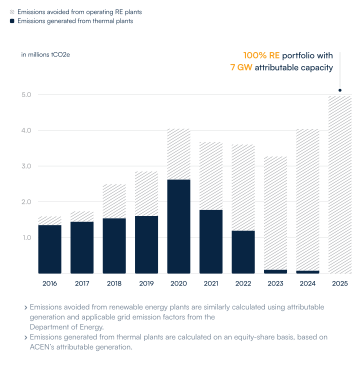
› Emissions avoided from renewable energy plants are similarly calculated using attributable generation and applicable grid emission factors from the Department of Energy.
› Emissions generated from thermal plants are calculated on an equity-share basis based on ACEN’s attributable generation.
On track to Net Zero
ACEN’s energy transition—and the completion of our shift to a 100% renewable energy portfolio—reflect our commitment to achieving Net Zero GHG emissions by 2050 and supporting the goals of the Paris Agreement.
Through our Net Zero ambition, we continue to reduce emissions across our operations and value chain, while addressing the lifecycle impacts of renewable energy technologies. Progress is tracked through our annual GHG inventory and Net Zero targets covering Scope 1, Scope 2, and Scope 3 emissions.
Following the divestment of our thermal assets and the achievement of a fully renewable portfolio, we are undertaking a rebaselining of our emissions profile in 2021 and updating our Net Zero targets. This ensures alignment with the latest climate science and long-term pathways for deep decarbonization of the power sector.
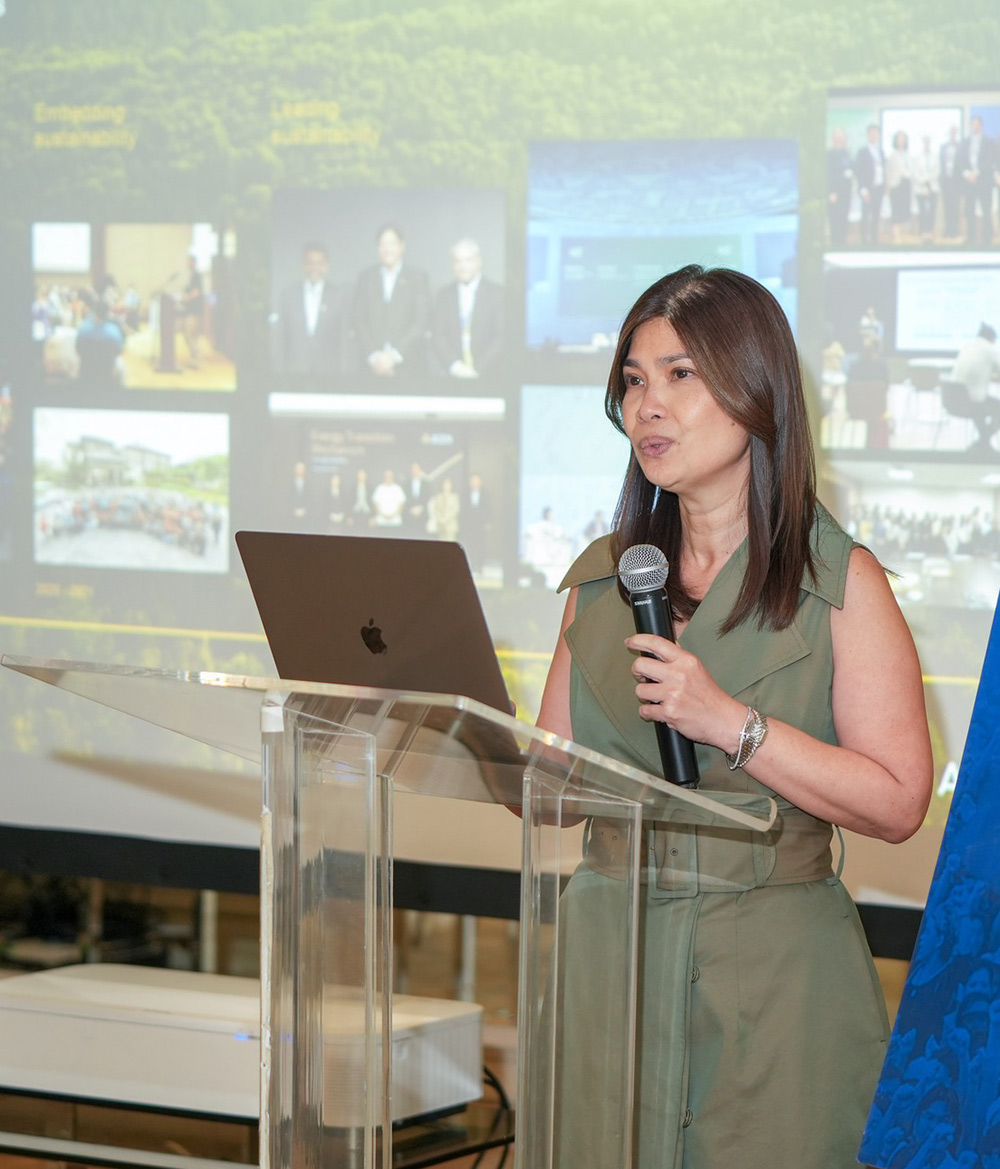
Our corporate sustainability team, headed by Irene Maranan, regularly conducts roadshows on Net Zero and ESG to ensure alignment across all business units.
Our 2025 GHG inventory reflects both the impact of our portfolio transformation and the continued expansion of our renewable energy assets.
Performance against net zero targets
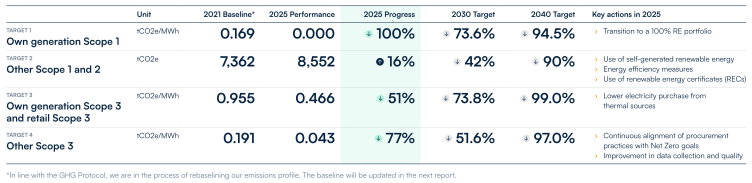
Target 1: Eliminate Scope 1 emissions from owned generation
Due to the divestment of remaining diesel assets, Scope 1 emissions from owned generation have effectively been reduced to zero. Emissions intensity declined to 0 tCO2e/MWh in 2025, achieving our long-term target ahead of schedule. We aim to maintain this level through 2040.
Target 2: Reduce Scope 1 (non-generation) and Scope 2 emissions
Other Scope 1 emissions from non-generation sources and Scope 2 emissions totaled 8,552 tCO2e in 2025—representing a 16 percent increase from the base year, but a 59 percent reduction from the previous year.
The year-on-year reduction was primarily driven by the use of renewable energy certificates (RECs) which reduced Scope 2 emissions by 13,192 tCO2e. While RECs support the decarbonization of electricity consumption, we continue to complement this with self-generated renewable energy and energy efficiency measures. We aim to prioritize the direct sourcing of renewable energy through both on-site and off-site solutions and continued improvements in energy efficiency in the long term.
To reduce Scope 1 emissions from non-generation purposes, including operational backup use and fleet vehicles, we shift to electric vehicles where possible and minimize the use of generator sets.
We recognize near-term challenges in achieving this target and are evaluating additional pathways to further reduce emissions.
Target 3: Reduce Scope 3 emissions from fuel- and energy-related activities
Scope 3 emissions from fuel- and energy-related activities decreased by 37 percent, driven by lower electricity purchases from thermal sources and increased renewable energy output.
As a result, Scope 3 emissions intensity associated with owned generation and retail electricity declined by 51 percent from 2021 levels.
Target 4: Reduce other Scope 3 emissions intensity
Other Scope 3 emissions covering purchased goods and services, capital goods, waste, business travel, employee commuting, and investments decreased by 54 percent from 2021 levels. The primary driver was lower expenditure on goods and services. Additionally, the divestment of ACEN’s diesel plants reduced upstream transportation and distribution emissions previously associated with fuel procurement for those assets.
With total output increasing by 23 percent, emissions intensity for these categories declined by 77 percent compared to the base year, reflecting continued efforts to align procurement practices with our Net Zero goals and improving data quality.
We will continue to prioritize improving emissions data quality across our supply chain, setting supplier-level expectations on decarbonization, and progressively shifting procurement toward lower-carbon goods and services.
~2.9 million tC02e
Total emissions in 2025, 30% decrease YoY
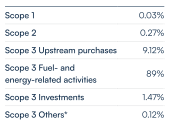
*Includes the following: waste generated during operations, business travel, and employee commuting
Looking ahead
We will continue to expand renewable capacity, improve operational efficiency, and collaborate with suppliers and partners to further reduce lifecycle emissions.
Through strong climate governance, disciplined implementation of decarbonization strategies, and transparent reporting, we aim to sustain
a fully decarbonized energy platform while contributing meaningfully to global climate goals.
Coal-to-Clean Initiatives
At Ecosperity Week in Singapore in May, Verra—one of the world’s leading carbon crediting standards—approved the Coal-to-Clean Credit Initiative under its Verified Carbon Standard program.
The framework enables the issuance of high-integrity transition credits to support the early retirement of coal-fired power plants and their replacement with renewable energy. It is intended to provide a robust, credible, and scalable pathway for accelerating the energy transition.
Building on this momentum, Mitsubishi Corporation and its subsidiary, Diamond Generating Asia (DGA), formally joined the collaboration through a Deed of Accession to the Memorandum of Understanding first established in 2024 by ACEN, GenZero, and Keppel. Their entry marks a significant step forward in advancing credible climate solutions across the region.
Learn more about Verra’s approved methodology and our cross-country collaborations for Transition Credits.
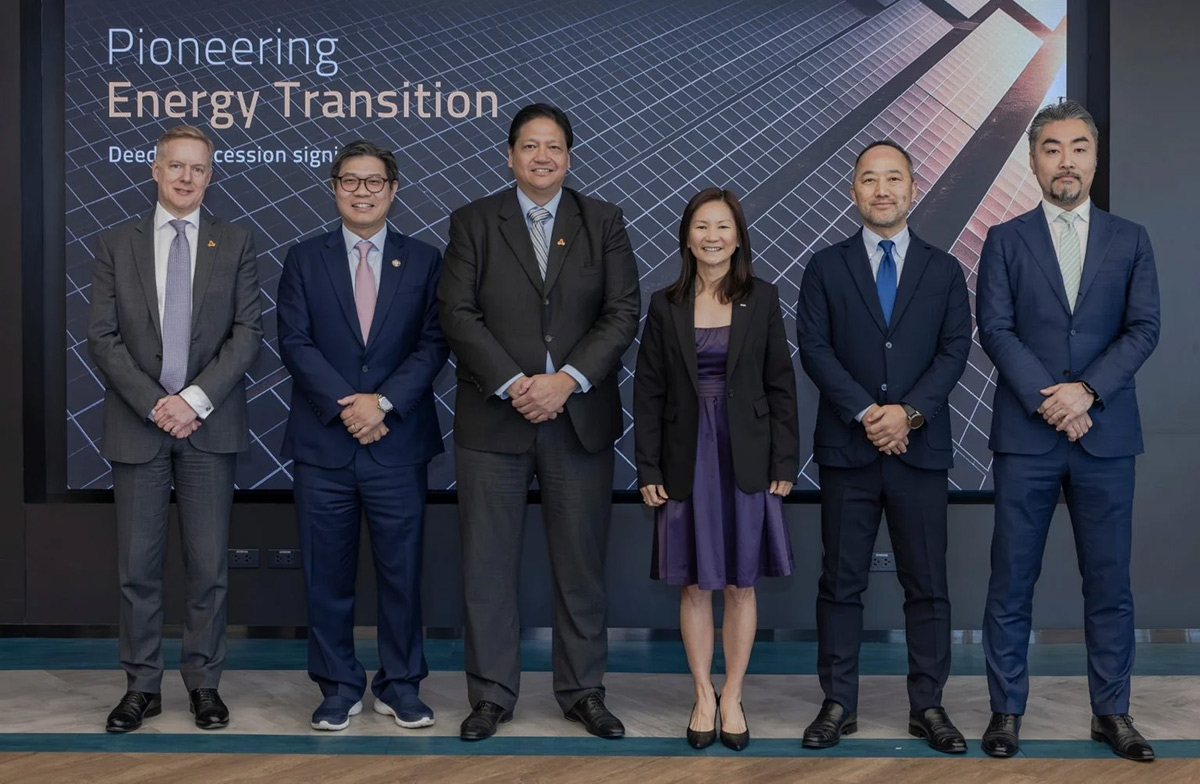
In photo (from left to right): Jonathan Back, Group CFO & Group Chief Strategy Officer of ACEN; Frederick Teo, CEO of GenZero; Eric Francia, CEO of ACEN; Cindy Lim, CEO of Keppel’s Infrastructure Division; Shinichiro Suzuki, CEO of DGA; Tatsuki Matsuda, Deputy General Manager of the Asia & Oceania Power Business Dept of Mitsubishi Corporation
Climate adaptation
and resilience
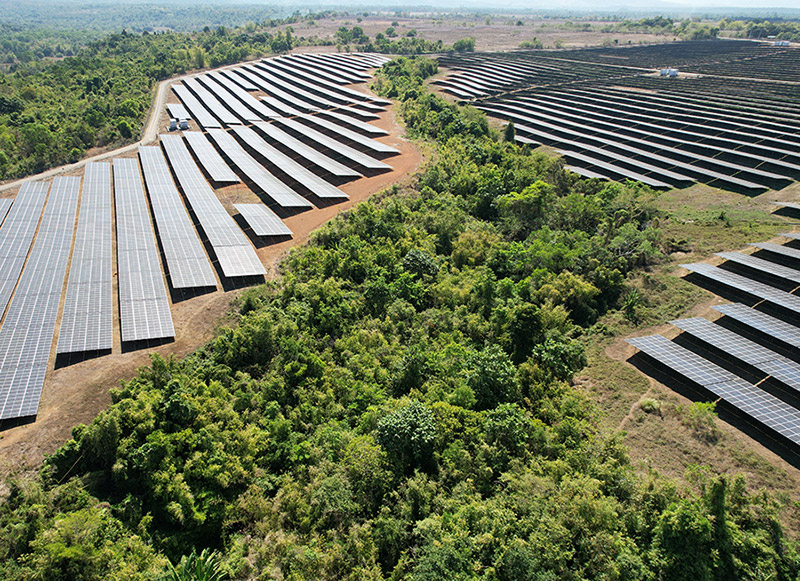
Palauig Solar 1 implements measures such as erosion and stormwater controls, firebreaks, and vegetation management to mitigate the risks of flooding and wildfires. To protect its workforce, heat index is regularly monitored and work arrangements are adjusted to prevent heat-related health issues.
To strengthen the resilience and adaptability of our portfolio amid a changing climate, we proactively identify and manage climate-related risks across all stages of our operations. Climate considerations are embedded early in project planning and carried through construction and day-to-day operations, supported by targeted measures that reduce exposure to extreme weather events and safeguard our people, assets, and surrounding communities.
Our approach is grounded in understanding the specific physical and transition risks in each location. We focus on priority hazards such as typhoons, flooding, extreme heat, and fire, applying localized, site-specific actions that address the unique conditions of each project.
Through regular risk assessments and strong cross-functional coordination, we continuously enhance our preparedness and response capabilities—enabling us to maintain reliable operations while strengthening long-term resilience amid evolving climate conditions.
Preparedness, response, and resilience measures
Preparedness and risk mitigation
We implement proactive measures to reduce exposure to extreme weather events and ensure operational continuity.
We leverage technology and real-time data to anticipate risks and act early.
Response and emergency management
We maintain strong on-the-ground response capabilities to protect people and assets.
Resilient design and long-term adaptation
We integrate climate resilience into the design and operation of our assets.
We prioritize the safety and well-being of our people under changing climate conditions.
Advocacy
We recognize that effective climate action requires a whole-of-nation approach—bringing together governments, the private sector, communities, and other stakeholders, supported by enabling policy and regulatory frameworks. We work alongside policymakers to help address the complexities of the energy transition and support the shift toward a Net Zero future. Guided by our Net Zero ambition and alignment with the Paris Agreement, we advocate for policies that accelerate renewable energy deployment, strengthen grid integration, scale energy storage, and enable a responsible transition away from coal—while safeguarding energy security and affordability.
Through active engagement across our Philippine and international markets, we contribute insights drawn from real-world project development and operations to support evidence-based policymaking. Our advocacy focuses on strengthening the policy and market foundations needed to mobilize long-term investment in clean energy, enhance system reliability, and unlock broader socio-economic value—supporting resilient growth and sustainable development for the communities we serve.
Engagements on climate policy and advocacy
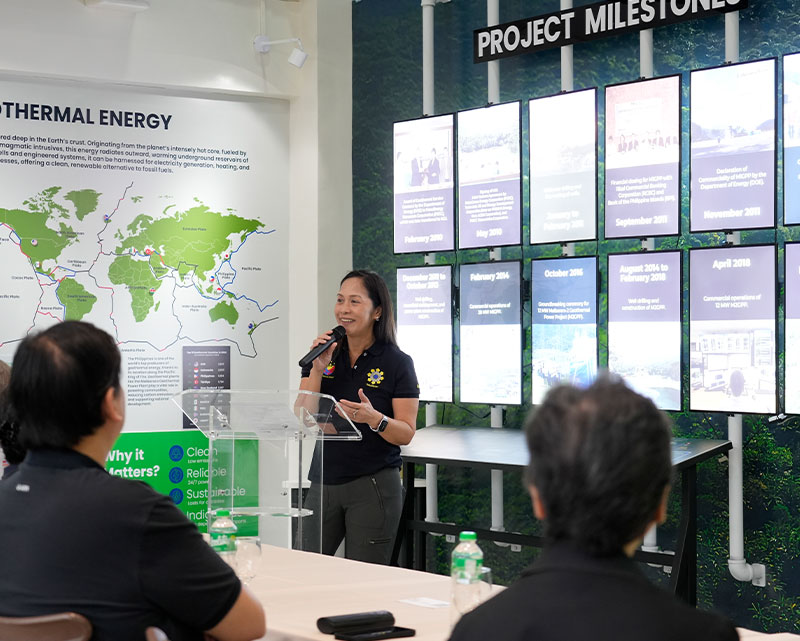
Government and regulators
We engage with government agencies and regulators through policy forums, national dialogues, and public consultations to help shape climate policies, drawing on our experience in renewable energy development and energy transition initiatives.
2025 highlights

Private sector
We regularly participate in industry forums, business-led coalitions and collaborative platforms to share insights, challenges, and opportunities to support energy transition, sharing our initiatives on Energy Transition Mechanism (ETM) and Transition Credits.
2025 highlights
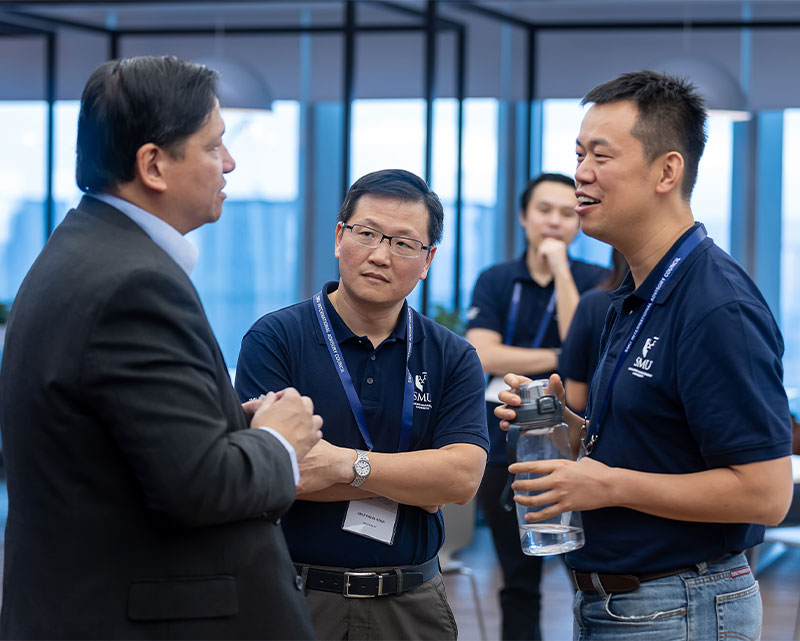
Academe, edia,
and other organizations
We engage the academe, media, non-government organizations, and other stakeholders through conferences, academic lectures, and multi-stakeholder platforms to contribute to informed public discourse and capacity-building on climate action.
2025 highlights