

Resource efficiency
and circularity
Endemic to the Philippines, the Northern-rufous hornbill can be found in Luzon where some of
our renewable energy projects are located. (Photo courtesy of CCIPH)
Resource efficiency
and circularity
Endemic to the Philippines, the Northern-rufous hornbill can be found in Luzon where some of our renewable energy projects are located. (Photo courtesy of CCIPH)
Environment management system
& procedures
Our ESG Policy reflects our commitment to efficient use of our resources. As part of our management procedures, plant employees are trained to implement our environmental management system, which is subject to external compliance audits.
Environmental impact monitoring is conducted quarterly across operational sites by site pollution control officers (PCOs) as part of their functions to ensure compliance and support data reporting requirements. These efforts are reinforced by periodic on-site validations by the DENR, as well as active multi-partite monitoring teams (MMTs) in selected plants, strengthening environmental oversight and impact management.
Adhering to best practices, we aim to certify all our plants on the Integrated Management System (IMS) to ensure operational excellence, enhance sustainability performance, and maintain compliance with global regulatory requirements. Our plants have garnered the IMS on Environmental Management System (EMS) ISO 14001:2015, Quality Management System (QMS) ISO 9001:2015, and Occupational Health and Safety Management System (OHSMS) ISO 45001:2018, verified by the DQS Certification Philippines, Inc. This certification provides a framework to improve environmental performance, streamline processes, and strengthen compliance and risk management.
~1 million solar panels
From Stubbo Solar to be recycled at end- of-life as part of its circularity certification
30%
Energy consumption from renewable sources, including on-site generation and electricity supported by RE certificates
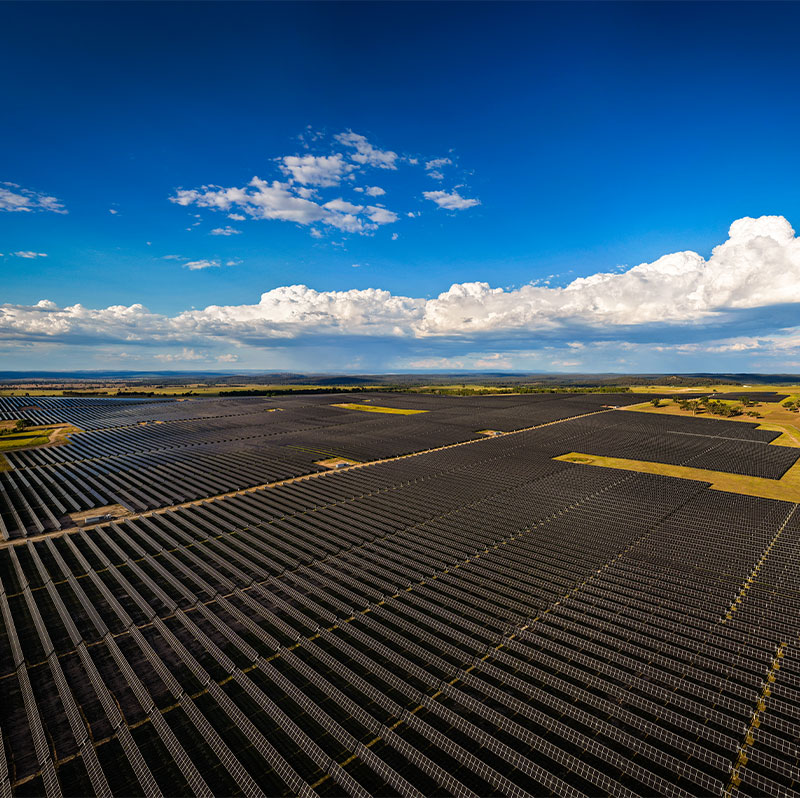
ACEN Australia encourages its contractors to procure materials with recycled content as part of its circularity strategy.
Waste management
We implement waste management initiatives tailored to our plants’ specific operational needs, in line with applicable country regulations and international standards. Environmental and social management plans embed waste minimization, reduction, and reuse measures across the full project life cycle.
Each site is equipped with appropriate onsite materials recovery facilities, and country-specific waste management procedures are consistently applied. Hazardous waste is properly segregated and stored before treatment by accredited facilities. We also implement waste segregation systems supported by reduction initiatives, including efforts to minimize the use of polyethylene terephthalate (PET) bottles and other single-use plastics.
In the Philippines, we are the first renewable energy company to adopt an integrated circular approach in our solar developments. We actively engage stakeholders across the value chain from project development through commercial operations, enabling us to strengthen plant-level waste management practices and embed circularity principles into Engineering, Procurement and Construction (EPC) contracts. We use paperless operations through cloud-based and digital forms to minimize paper waste and build employee awareness on responsible waste management, conducting learning sessions for employees on waste recycling and plastic pollution.
Across our international sites, plants in Vietnam and the U.S. integrate repair and refurbishment practices into maintenance activities, reducing waste generation, and lowering procurement costs. In India and Vietnam, hazardous waste is managed through recycling methods and battery buyback arrangements, while damaged solar modules are either repaired onsite or recycled, depending on condition, to minimize disposal.
Waste management initiatives across our sites
North Luzon Renewables (NLR)
Palauig Solar 1
New England Solar and Stubbo Solar
Monsoon Wind
Quang Binh Wind
Stubbo Solar achieves solar circularity certification
In October 2025, Stubbo Solar became the first large-scale solar project to achieve CPVA Certified status under the Circular PV Alliance’s assurance framework. Covering nearly one million solar panels, the certification confirms that the project meets independent standards for solar circularity. The CPVA Certified framework evaluates performance across planning, procurement, operations, and decommissioning, ensuring that PV modules and other project components have credible pathways for reuse or recycling. It also assesses supply chain transparency, waste minimization measures, and repair and refurbishment practices during operations.
Stubbo Solar received an “Exceeds” rating for circular economy performance, acknowledging its whole-of-lifecycle approach to managing materials as valuable resources rather than waste and setting a strong benchmark for future solar developments. This certification recognizes the circular practices embedded during construction and ACEN Australia’s long-term commitment to sustainability.
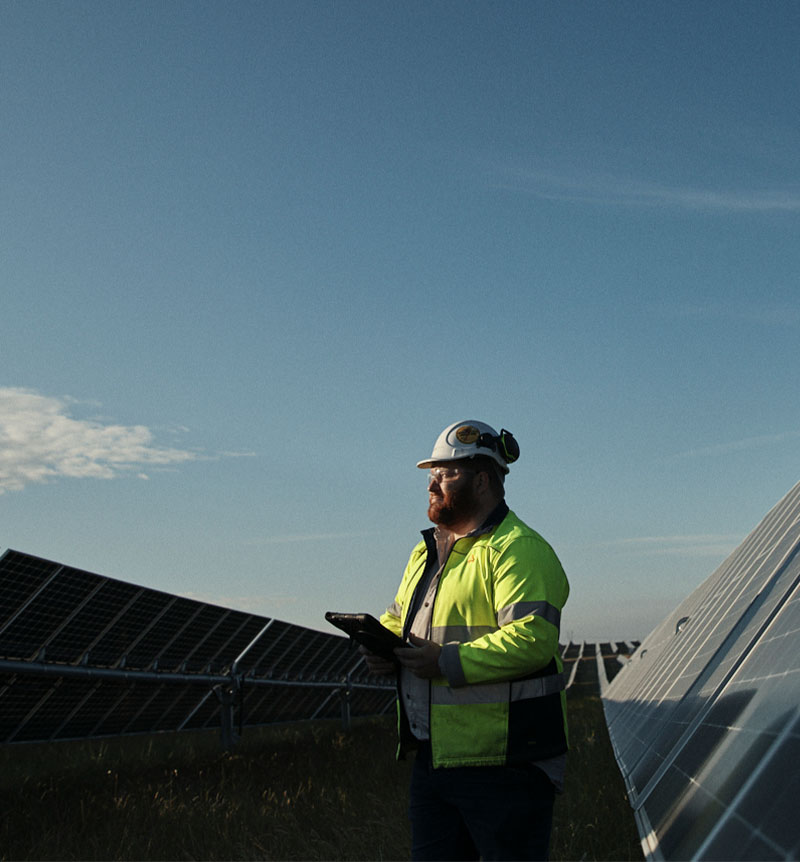
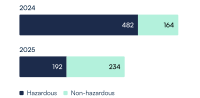
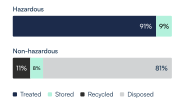
In 2025, total waste generation decreased by 34 percent compared to 2024 due to our diesel divestment. Twenty percent of non-hazardous waste from our projects was diverted from landfill, reflecting our circularity efforts. For hazardous waste, we ensure compliance with national regulations on transport and treatment, including recycling, chemical immobilization, and decontamination. Waste that has not been transported is properly stored in our materials recovery facilities.
Waste generation
(in metric tons)
Waste diversion
and disposal
End-of-life management
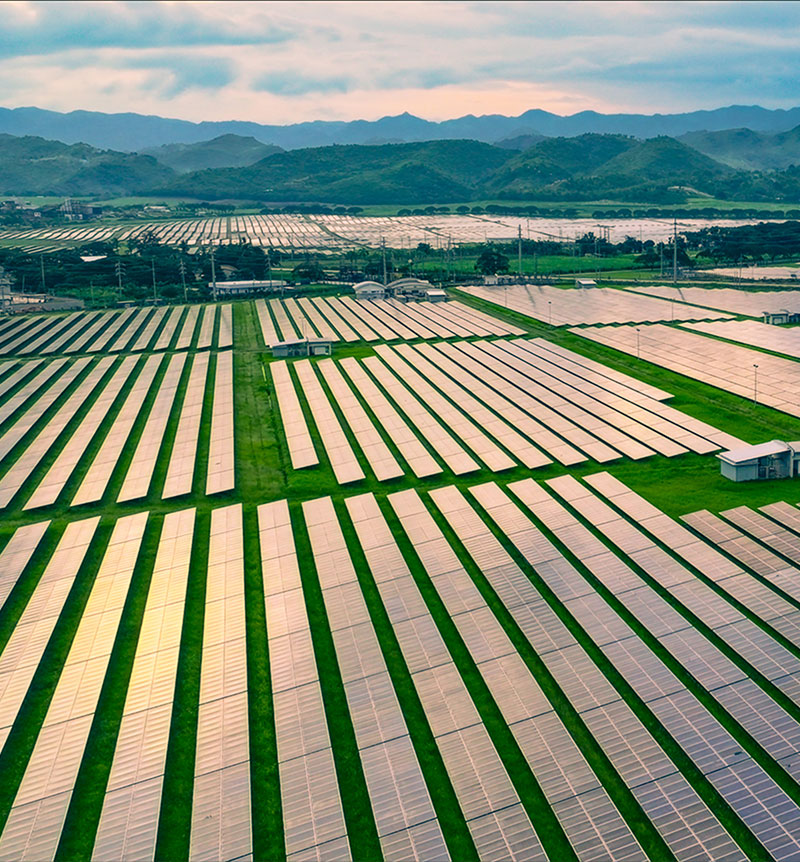
To restore plant efficiency and enhance energy output, our 45 MW SaCaSol in Negros Occidental is replacing select solar panels, with the works scheduled for completion by 2026.
Our commitment to responsible waste management ensures adherence to best-in-class end-of-life practices. We carefully select and monitor EPC partners to ensure alignment with applicable International Electrotechnical Commission (IEC) and ISO standards.
EPC contractors are required to implement appropriate management measures for PV panels, covering recommended treatment, storage, and disposal facilities within operational areas, supported by cost estimates for each stage of the waste management process.
During the operational phase, we also integrate end-of-life management plans that comply with national regulations and are customized to reflect project-specific design requirements, stakeholder considerations, and site-specific environmental conditions.
Energy management
We ensure that energy reduction measures are implemented across our projects and offices, while remaining compliant with applicable energy management regulations.
Across our projects, we adopt a range of energy conservation strategies, including upgrading or retrofitting existing systems with more efficient technologies, optimizing operations and maintenance practices to minimize energy use, and encouraging energy-conscious behaviors. We use SCADA to monitor energy consumed in substations, control rooms and offices.
Across our offices, we also implement a range of energy efficiency initiatives to reduce consumption while maintaining comfort for our employees. These include the use of efficient lighting systems, HVAC optimization, and setting air-conditioning units at appropriate temperature levels.
We also promote the practice of switching off machinery and equipment when not in use, alongside regular cleaning and maintenance of air-conditioning unit filters to ensure efficient performance. Preventive maintenance scheduling and optimized route planning further support energy efficiency across our operations.
Together, these initiatives strengthen operational efficiency while lowering energy consumption across our sites. By continuously improving our practices, we support responsible resource management and enable achievement of our decarbonization and sustainability goals.
NorthWind: Extending asset life
We achieved a milestone in our energy transition journey with NorthWind’s comprehensive maintenance and repair program. With more than 17 years of operation, NorthWind’s turbines require proactive life extension to ensure continued, reliable clean energy generation. To address this, we implemented a two-phase repair and refurbishment program from February 2025 to June 2026 that includes blade bearing replacement, pitch and hydraulic system refurbishment, and blade repairs.
These upgrades will extend the plant’s operating life by up to 10 years, enhance generation efficiency, defer decommissioning or repowering by up to a decade, and deliver sustained long-term value to stakeholders.
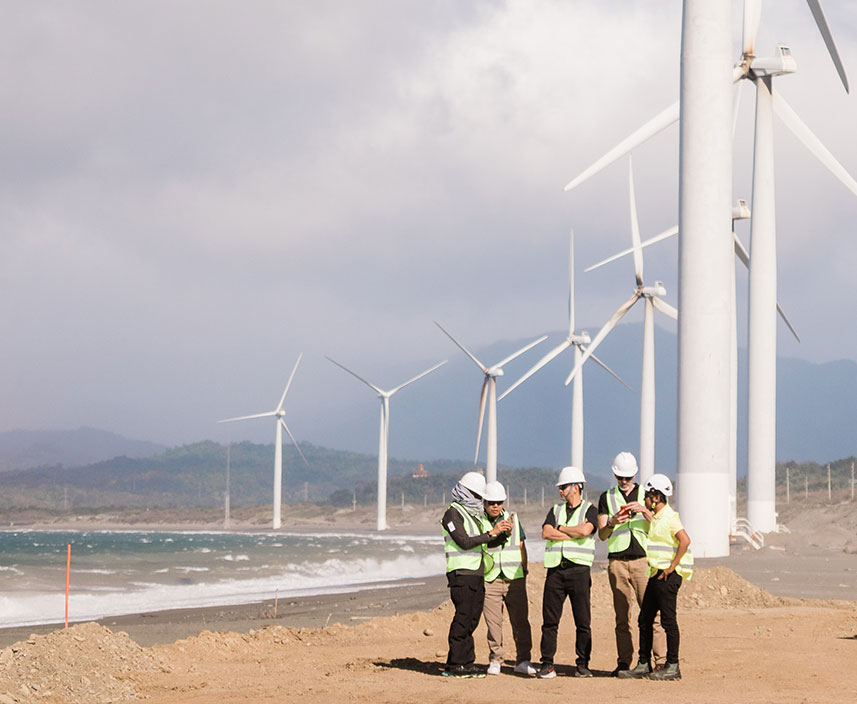
Energy management initiatives across our sites
NLR and NorthWind
Palauig Solar 1
New England Solar and Stubbo Solar
Masaya Solar, Paryapt Solar, and Sitara Solar
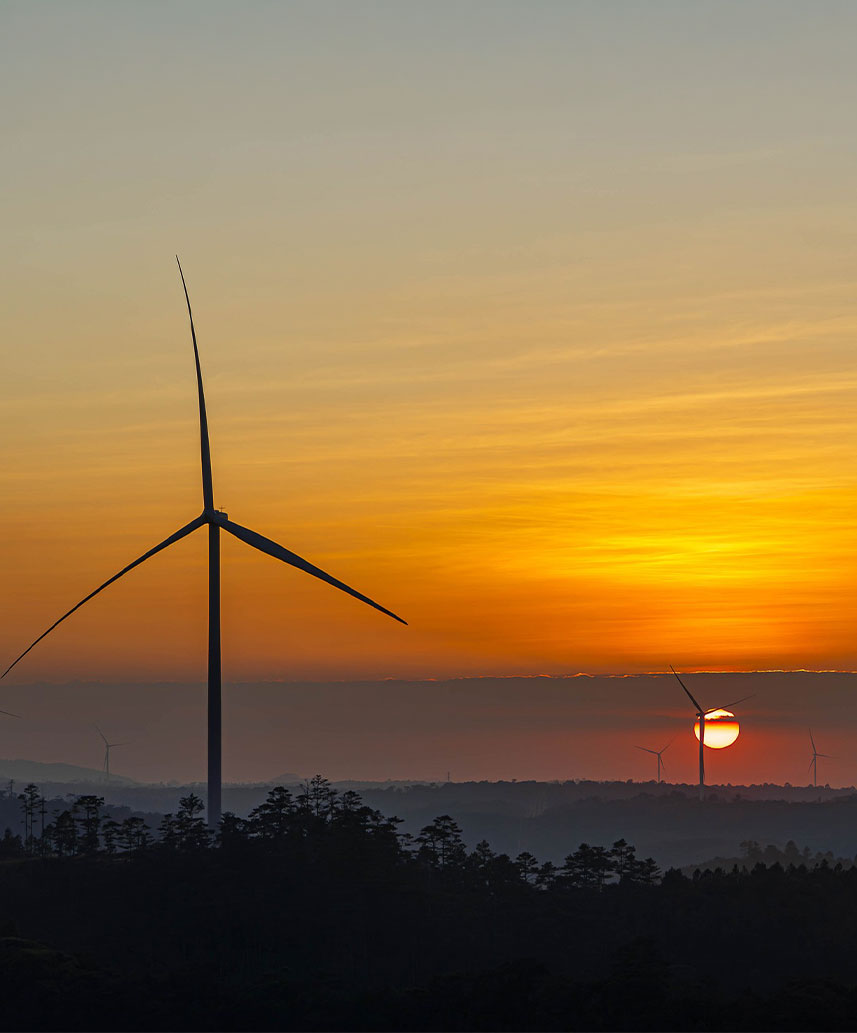
Stretching across Lao PDR’s Dak Cheung District of Sekong Province and the Sanxay District of Attapeu Province, 133 wind turbines of the 600 MW Monsoon Wind rise from the ridgelines, turning steadily in the region’s strong, reliable winds.
Monsoon Wind
Lac Hoa and Hoa Dong Wind
Ninh Thuan Solar
Super NT
Quang Binh Wind
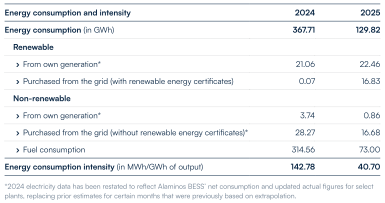
Total energy consumption decreased by 65 percent given the recent divestments of the diesel plants. Electricity generated from our renewable plants that were used for own consumption reached 20.56 GWh, while electricity consumption supported by RE certificates amounted to 16.77 GWh. As a result, 29% of our total energy consumption came from renewable sources, reducing 28,740 tCO2e of scope 2 emissions.
Water management
While renewable energy facilities are generally not water-intensive, we recognize that the countries where we operate face high levels of water stress and therefore actively manage our water use across operations.
We promote water stewardship across our projects and offices by adopting water-efficiency measures, shifting from freshwater use to alternative water sources, and ensuring the responsible discharge of used water. These practices are implemented in compliance with applicable local and national water management regulations, securing essential permits for discharge.
Across our plants, water-saving practices are reinforced through signages and employee awareness trainings that encourage mindful water use. During construction, water for activities such as dust suppression is sourced from non-potable supplies, including onsite dams, to minimize freshwater use. We also ensure that waste water generated at our sites is treated in accordance with national regulations, with regular testing conducted to prevent the release of harmful substances and protect surrounding ecosystems.
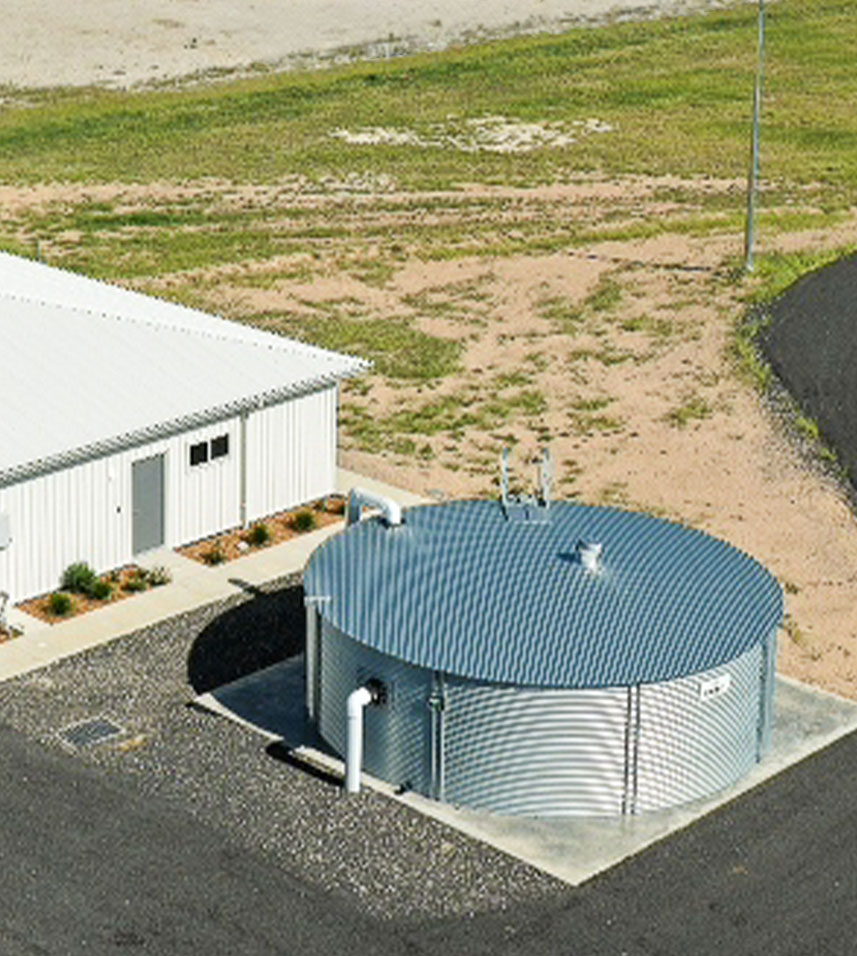
The rainwater harvesting tank at Stubbo Solar in Australia
Energy management initiatives across our sites
MonteSol and SaCaSol
Palauig Solar 1
NLR and NorthWind
New England Solar and Stubbo Solar
Sitara Solar, Paryapt Solar, and Masaya Solar
Mui Ne Wind
Monsoon Wind and Quang Binh Wind
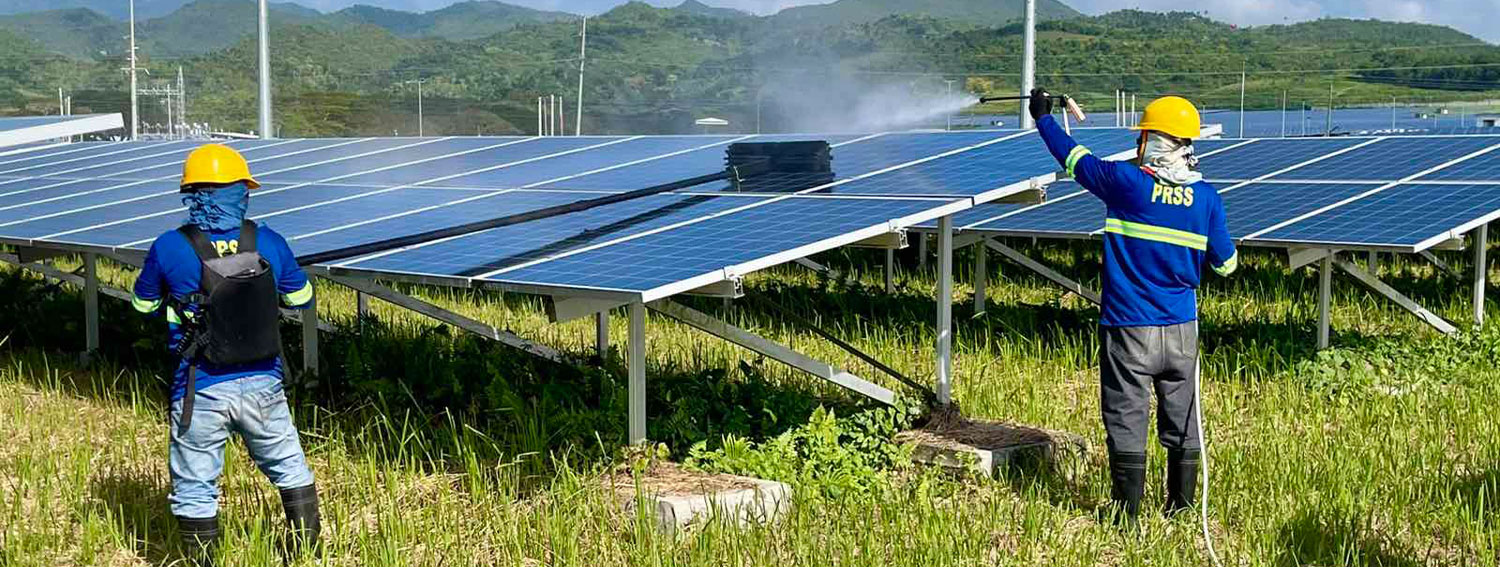
In the Philippines, our 45 MW SaCaSol project uses rotating brushes to clean module surfaces while minimizing water use.
Water use decreased by 4 percent due to continuous implementation of water efficiency measures. Meanwhile, water intensity which is measured in terms of cubic meters of water withdrawn per GWh of energy generated decreased by 4 percent, to 23.85 from 24.64. Progress shows that we are on track with our 5% annual year-on-year reduction target for total water intensity.