


Shaping systems,
markets, and solutions
Our quarterly analyst and investor briefing provides a snapshot of our company’s financial and ESG progress.

Shaping systems,
markets, and solutions
Our quarterly analyst and investor briefing provides a snapshot of our company’s financial and ESG progress.
Our governance framework is designed to embed sustainability into decision-making at every level of the organization. We uphold clear accountability, strong oversight, and cross-functional coordination to ensure that our ESG priorities are consistently integrated into strategy and operations.
Through this structured approach, we are able to proactively manage risks, capture opportunities, and drive performance across our portfolio. We remain committed to strengthening our governance practices to support responsible growth and deliver long-term value for our stakeholders.
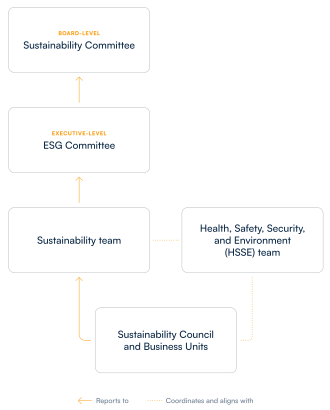
Across the organization, we establish clear roles and coordination to effectively oversee sustainability strategy, manage risks, and implement ESG programs and practices.
Sustainability Committee
ESG Committee
Sustainability team
Health, Safety, Security and Environment (HSSE) team
Sustainability Council
Our sustainability governance structure
Diversity in leadership
We are committed to maintaining a Board composed of qualified and dedicated directors with a diverse mix of expertise, experience, skills, and backgrounds. Diversity considerations include business experience, age, gender, and ethnicity, with Board nominees selected based on merit. We also seek to promote meaningful gender representation and independence to support effective oversight and sound decision-making.
Our Board is comprised of 11 members, of whom two are women and four are independent directors, with 10 serving as non-executive and/or independent directors. Independent directors maintain no relationships that could impair objective judgment. Beyond the Board, we monitor leadership diversity across the organization, with 43 percent of employees at the Assistant Vice President level and above represented by women.
Sustainability in our policies
We maintain robust governance policies and practices throughout our operations, ensuring that all interactions with stakeholders, partners, and communities are conducted with the highest ethical standards. To support the integration of sustainability across the business, our operations are guided by a set of policies that strengthen oversight and accountability on priority ESG matters, including:
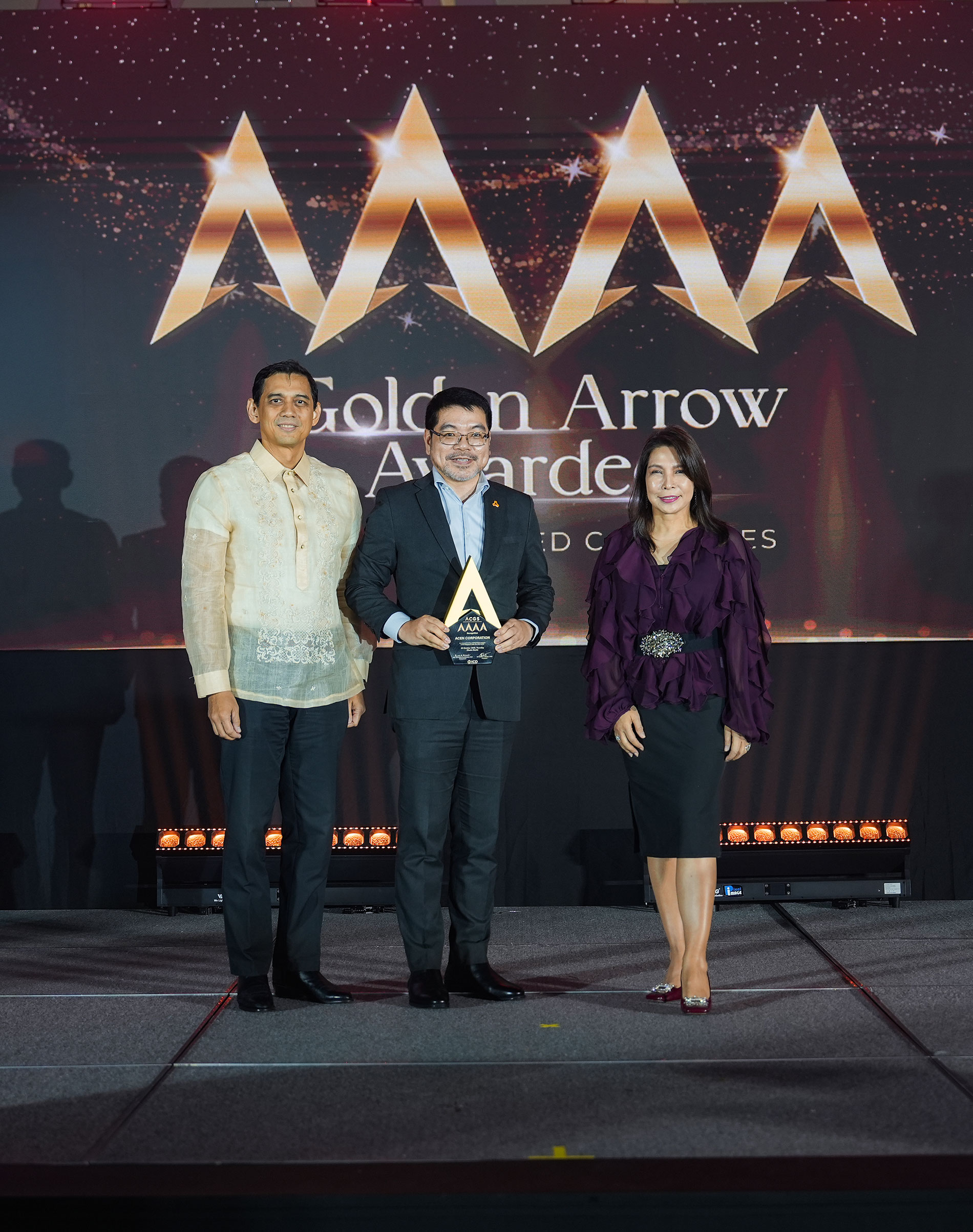
ACEN, for the third consecutive year, was awarded with 4 Golden Arrows by the Institute of Corporate Directors (ICD) at the 2025 ASEAN Corporate Governance Scorecard (ACGS) Golden Arrow Awards, a testament to its consistent adherence to best-in-class corporate governance practices.
In 2025, our Board approved amendments to the ESG Policy and Whistleblower Policy. To reinforce our commitment to good governance and ethical conduct across the organization, we implement governance programs that are integrated into employee learning and development through in-person sessions and e-learning modules. We require all new hires to complete training and online assessment on the Code of Conduct and Ethics. Employees are also required to annually affirm their compliance with our Code of Conduct and Ethics.
We recorded zero material incidents of violation to the Code of Conduct in 2025, reflecting our continued commitment to ethical business practices.
Supply chain
Our commitment to responsible business practices extends beyond our own operations to our entire value chain. We actively engage with suppliers who uphold integrity and high ethical standards, and through strategic partnerships anchored in sustainability, we aim to generate positive environmental and social outcomes for our stakeholders.
Our suppliers align with our ESG policies and practices through the following documents below:
|
Supplier Code |
Establishes suppliers’ commitment to uphold and protect human rights; comply with labor, environmental, health and safety standards, and consistently observe ethical business practices. All suppliers are required to acknowledge and sign the Supplier Code of Conduct prior to accreditation. |
|---|---|
|
Procurement Policy |
Establishes key principles and promotes high standards throughout the procurement process, while ensuring compliance with business integrity, ethical conduct, and our ESG policies. |
|
Procurement |
Defines the standardized governance, principles, and processes for acquiring goods and services across ACEN to support and operationalize the principles set forth in our Procurement Policy. |
|
Supplier |
Collect information on suppliers’ human rights, labor, environmental, and governance practices for screening and accreditation purposes. All suppliers are required to complete the forms prior to accreditation. |
|
Supplier performance |
Assesses supplier performance following the delivery of goods or services, covering areas such as quality, timeliness of delivery, customer service, and compliance with environmental, health, and safety requirements. |
We evaluate suppliers based on technical and financial capabilities, compliance to applicable laws, regulations and standards, and alignment with our ESG requirements. Risks specific to country, sector, and commodity are being considered in the supplier screening process. For accreditation purposes, we conduct internal and external desk assessments to all suppliers.
Supplier engagement and training
Beyond establishing policies and guidelines, we actively engage our suppliers to better understand their ESG practices, build shared accountability, and identify opportunities for collaboration and continuous improvement.
In 2025, we conducted our first supplier sustainability training in partnership with givvable, aimed at aligning suppliers with our ESG commitments. We discussed our ESG commitments, key supply chain ESG risks and considerations, and an introduction to greenhouse gas emissions. The training was attended by more than 400 participants and received strong positive feedback, achieving an average program rating of 4.8 out of 5.
We will continue to strengthen supplier engagement efforts, with a focus on critical suppliers and higher-risk areas within our supply chain, to drive consistent ESG performance and support long-term, responsible value creation.

ACEN Australia’s voluntary modern slavery statement
Given our procurement activities in the renewable energy and construction industries, there is an inherent risk of modern slavery practices within our supply chain. We recognize that the rapid growth of the renewable energy sector may heighten modern slavery risks if not responsibly managed. As part of our response to manage this risk, ACEN Australia published our first voluntary modern slavery statement for the year 2024, with another statement to be published for 2025 activities.
The statement outlines the risks of modern slavery in our operations and supply chains, actions undertaken, and plans to strengthen policies and practices. Implemented initiatives include prioritizing the use of Australian-based contractors subject to Australian labor laws, embedding modern slavery considerations into procurement and tender processes, introducing due diligence processes for high-risk supply chains, and incorporating modern slavery clauses into contracts with key suppliers.
The statement commits us to responding appropriately to any incidents of modern slavery within our operations or supply chains, guided by the Australian Government’s Guidance for Reporting Entities and supported by our Whistleblower Policy. This ensures concerns can be raised confidentially, investigated responsibly, and addressed in a manner that prioritizes remediation, accountability, and the protection of affected individual.

Environment and Social Management System (ESMS)
We proactively manage environmental and social (E&S) risks and opportunities through a strengthened Environmental and Social Management System (ESMS).
Our ESMS system process
In 2025, we aligned the ESMS more clearly to the full project lifecycle—from early area due diligence and site finalization through construction, operations, and periodic reviews—to ensure safeguards are embedded at key decision points and maintained over time.
Our enhanced ESMS provides a lifecycle-based framework that guides teams through systematic risk identification, meaningful stakeholder engagement, development of appropriate management plans, and structured approvals and monitoring. This approach strengthens consistency across projects to ensure safeguards are effectively applied from planning through operations.
STEP 1:
Initial assessments of the
identified location
STEP 2:
Land acquisition
STEP 3:
Project planning
STEP 4:
E&S risk assessment
STEP 5:
Develop E&S action plan
STEP 6:
Project approval
STEP 7:
Start of project development
STEP 8:
Implement and monitor the E&S management plan