

Just Energy
Transition initiatives
Our Just Energy Transition roadmap reflects a people-centered approach to decarbonization—recognizing that the shift to clean energy must be inclusive, responsible, and responsive to the needs of affected stakeholders.
As we advance with a 100 percent renewable energy portfolio and our Net Zero ambition, we place equal importance on managing the social dimensions of the transition alongside environmental outcomes.
At the heart of our approach is a commitment to ensuring that workers and host communities are supported throughout the transition. We begin with early and transparent engagement, enabling stakeholders to understand potential impacts and participate in shaping transition pathways. Rather than treating workforce impacts as an afterthought, we integrate workforce planning into our strategy, identifying opportunities for reskilling, redeployment, and career mobility within our growing renewable energy portfolio and adjacent industries.
For host communities, we focus on sustaining and enhancing local economic value. We recognize that energy assets often serve as key sources of employment and economic activity, and we therefore explore options such as asset repurposing and alternative land use to support continued livelihood generation.
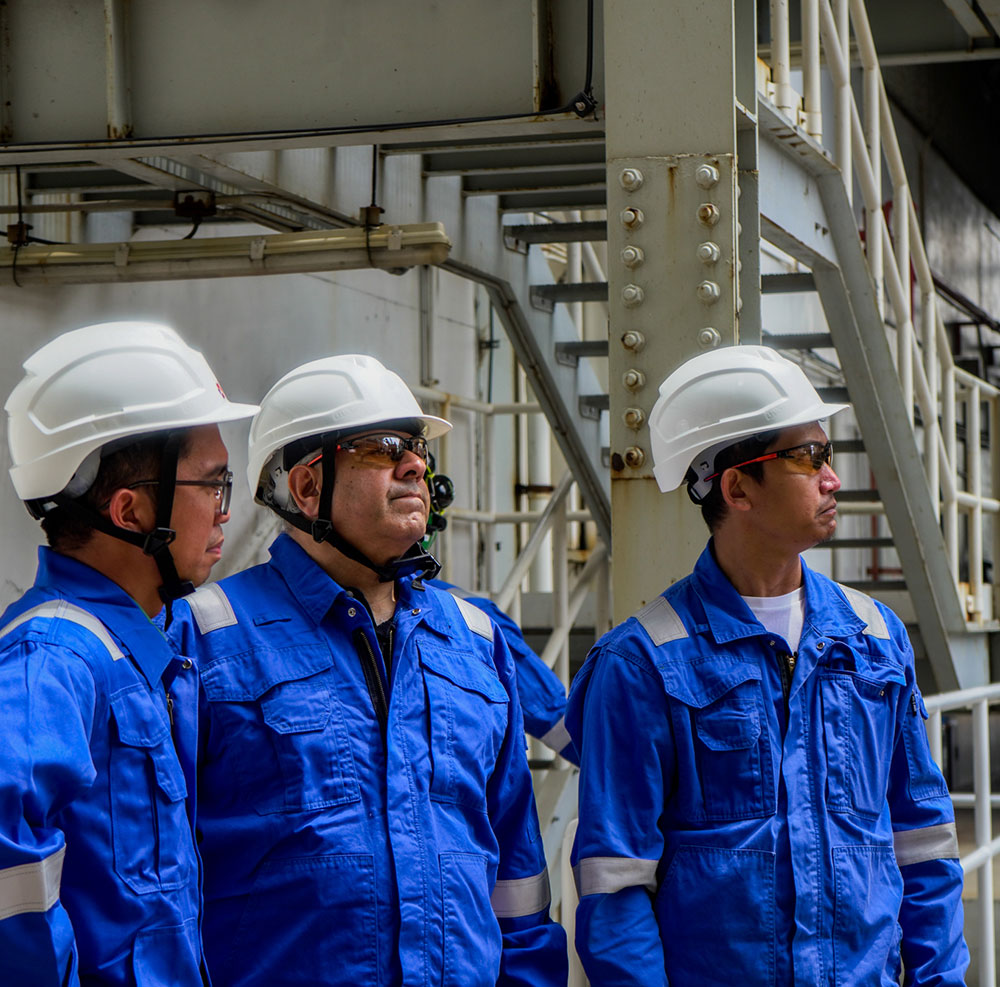
Ashvin Dayal (center) of The Rockefeller Foundation visited the the South Luzon Thermal Energy Corporation (SLTEC) coal plant in Batangas, Philippines to meet with the workers and learn more about the climate and economic implications of ACEN’s Energy Transition Mechanism (ETM).
These solutions are designed to be context-specific, reflecting the unique needs and opportunities of each community.
We also adopt a systems perspective, coordinating closely with government, industry partners, and local institutions to align social programs, infrastructure development, and capacity-building initiatives that support long-term resilience.
Importantly, we view the just transition as an evolving process. By working with global partners and initiatives, we continue to refine our approach, share learnings, and contribute to the development of practical, scalable models for emerging markets.
Through this approach, we aim to demonstrate that the energy transition can be not only low-carbon, but also equitable—creating opportunities while minimizing disruption for the people and communities we serve.